Shopping Basket
You have no items in your shopping basket.


Wishlist
Your wishlist is currently empty
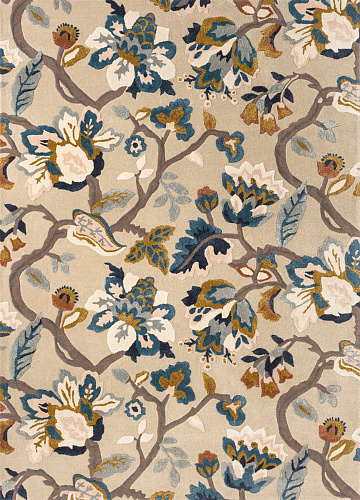
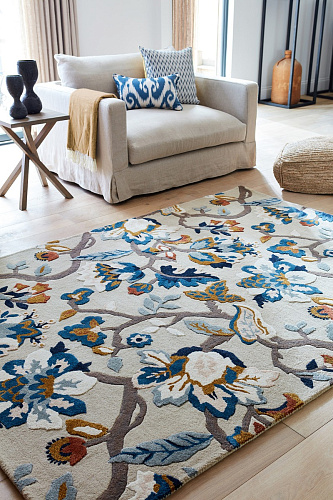
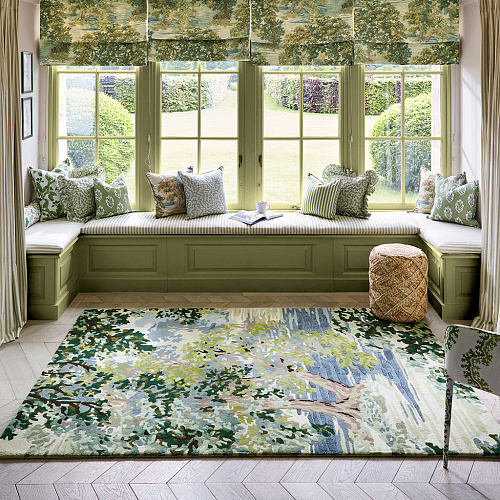
Sanderson rugs carry a lineage that very few brands in the interior world can match. Founded in 1860, Sanderson built its reputation on iconic florals and botanical motifs — hand-drawn, and drawn directly from the English garden. Arthur Sanderson opened his first Soho Square showroom selling wallpaper; what he was actually selling was a particular idea of Englishness — naturalistic, unhurried, meticulously observed. That idea never left the brand. Since 1924, Sanderson has held a Royal Warrant for supplying fabrics and wallcoverings to the Royal Residences , a distinction it has maintained for over a century. When that same design authority is translated into rugs, the result is something that feels less like a floor covering and more like an archive brought underfoot.
In 2020, Sanderson became the cornerstone of the newly formed Sanderson Design Group — a portfolio of seven quintessentially British luxury interiors brands including Harlequin, Morris & Co., Zoffany, Clarke & Clarke, and Scion. Within that group, Sanderson occupies the heritage position: the brand most deeply rooted in the archive, most committed to the hand-drawn tradition, and most recognisable to anyone who has ever spent time in a well- considered British interior.
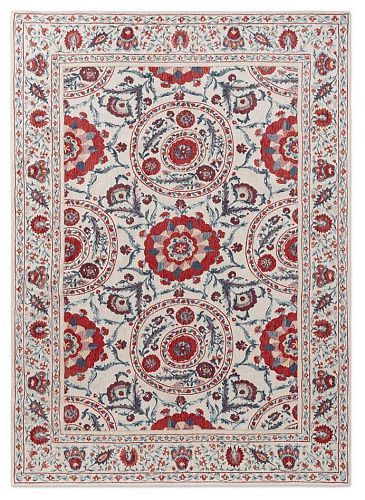
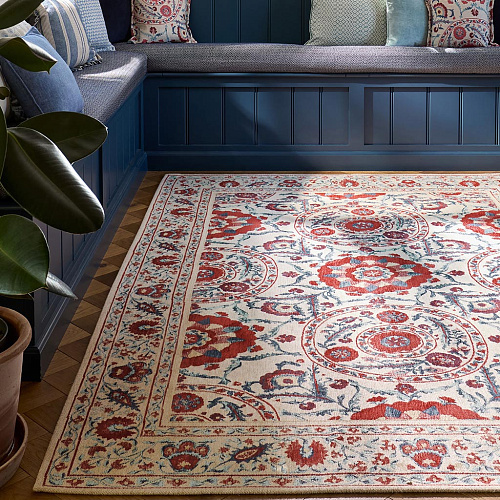
Sanderson's rug collections are crafted in collaboration with Dutch specialists Brink & Campman, transforming hand-drawn archive motifs into hand-tufted floor pieces in premium wool. The process matters because the designs were never conceived for rugs — they began as wallpaper patterns, embroideries, and fabric prints, some of them decades old. Translating that level of detail into a tufted pile construction without losing the drawing quality underneath requires a manufacturer who understands what's at stake. Brink & Campman do. The pile material is pure new wool, backed with cotton and latex, with a pile height of around 12mm and a total weight of 4,500 gr/sqm — dense enough to hold fine botanical detail crisp and legible at floor level.
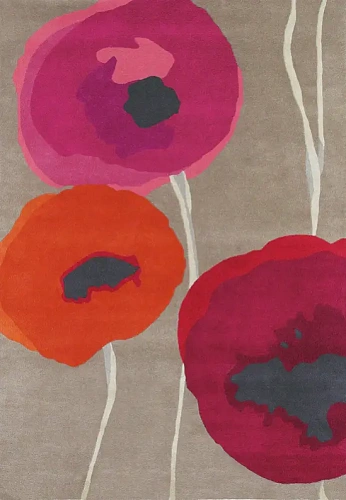
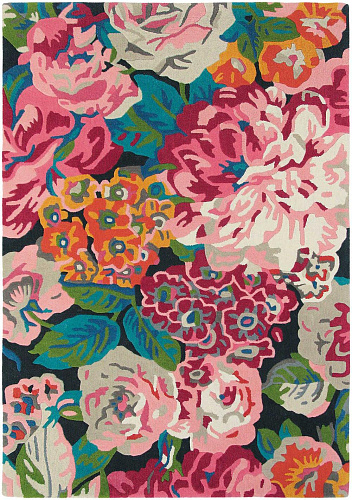
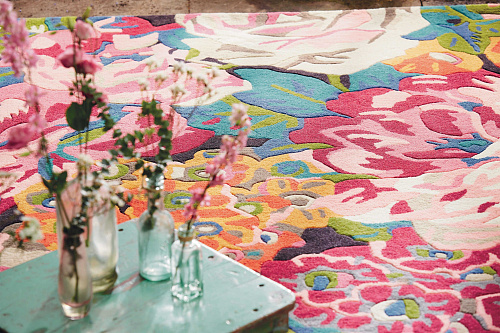
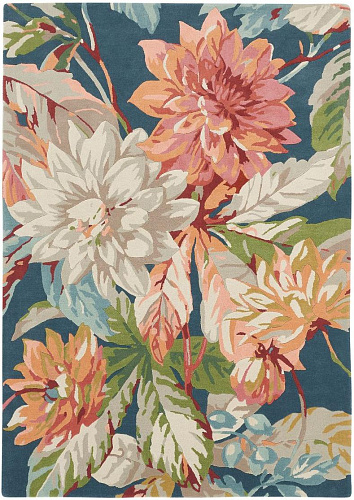
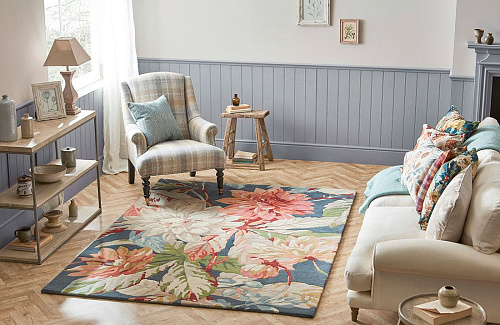
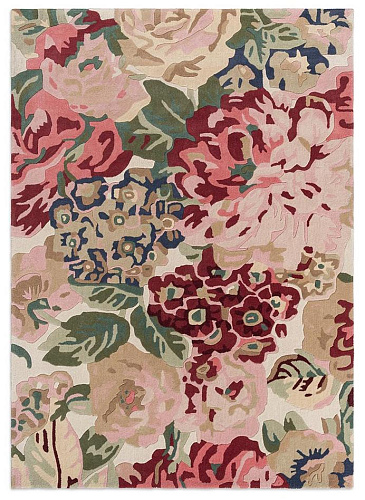
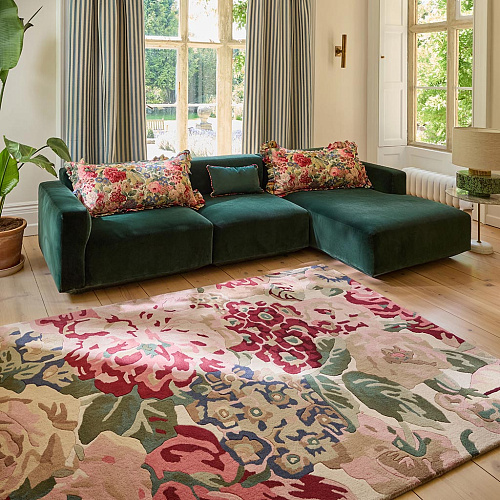
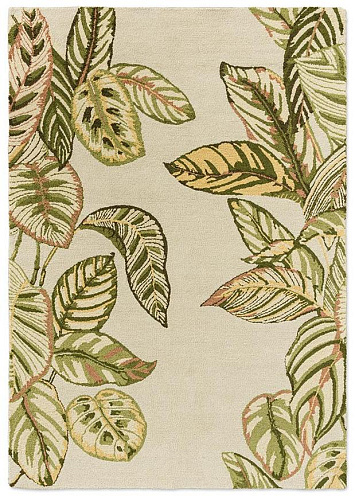
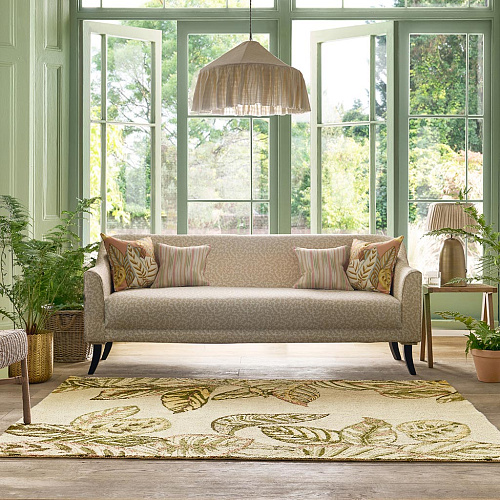
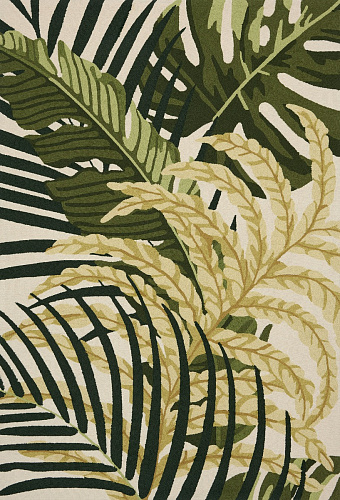
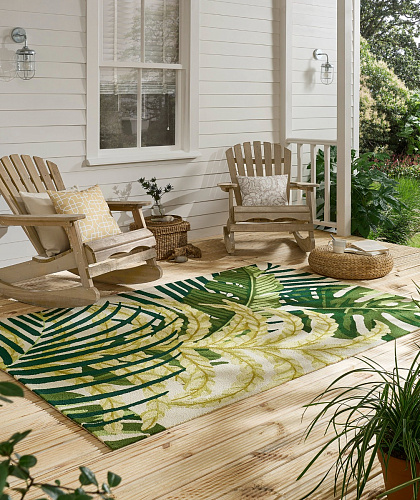
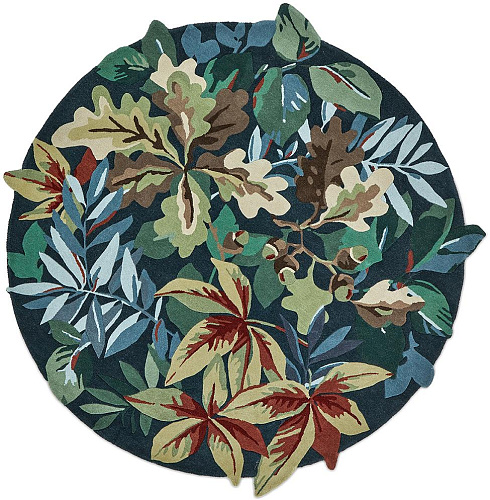
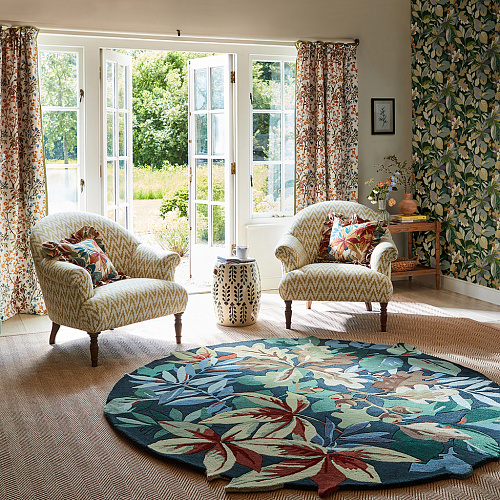
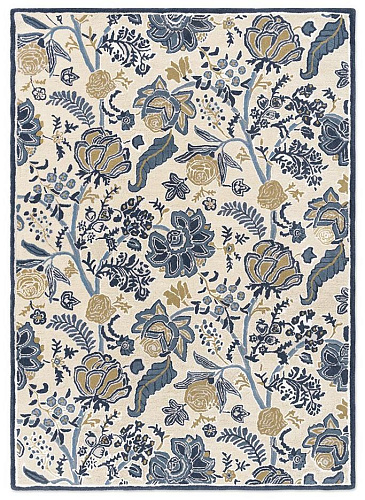
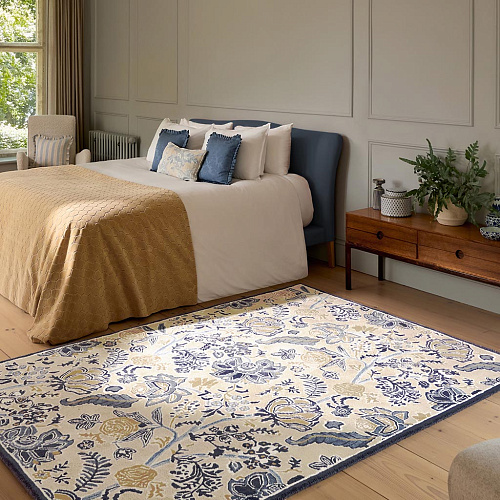
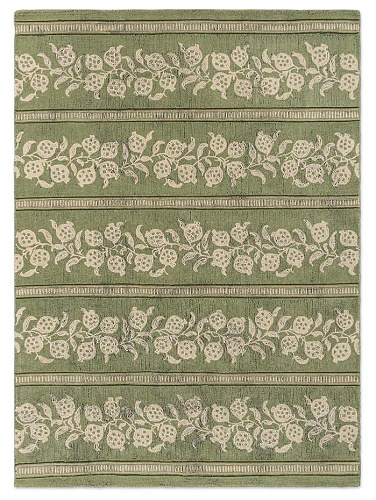
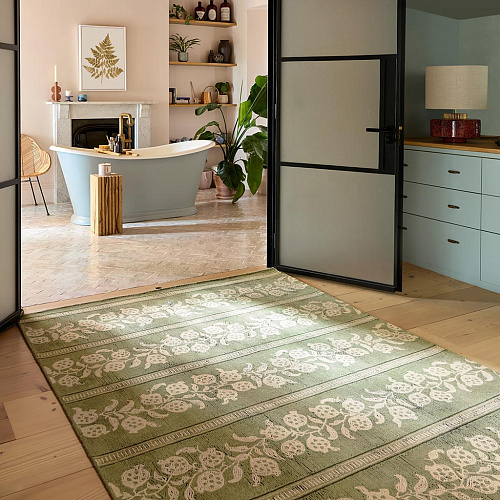
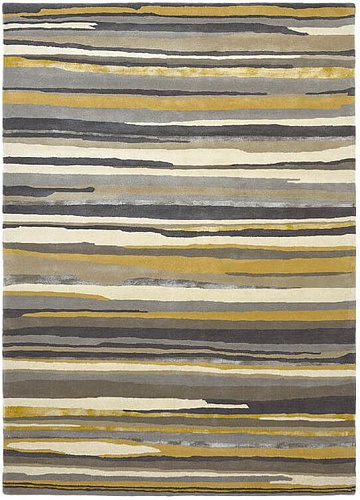
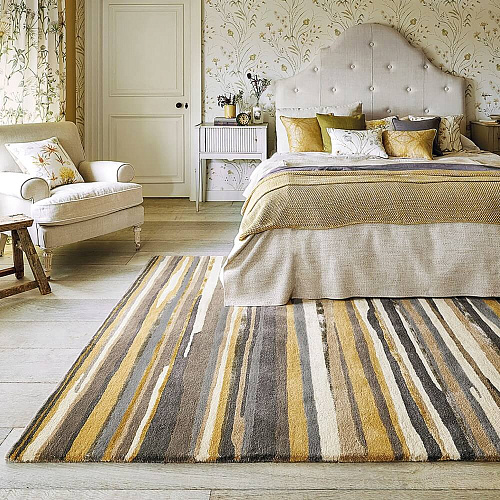
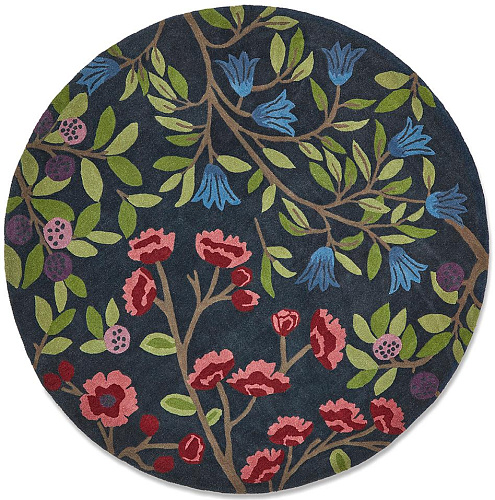
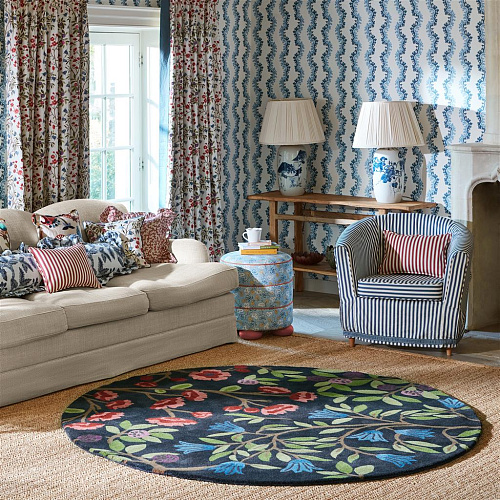
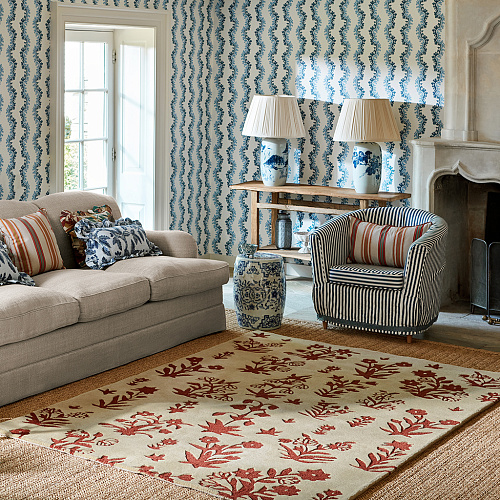
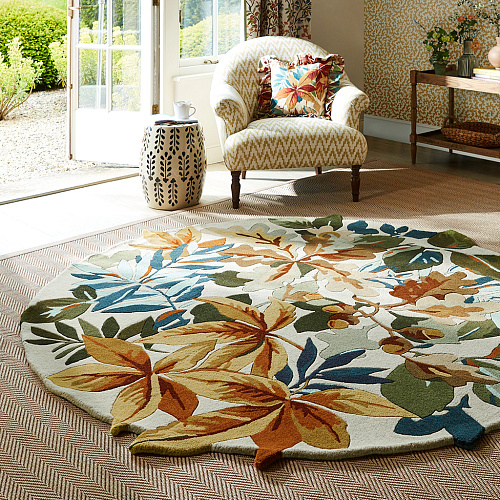
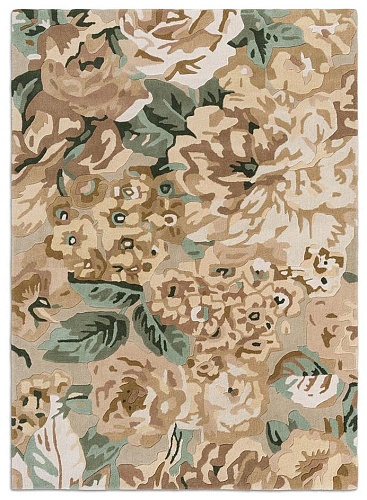
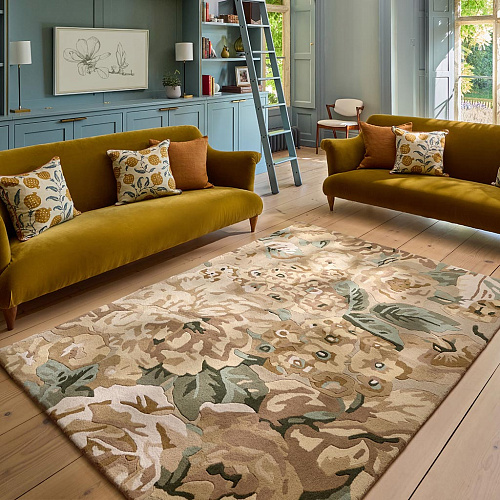
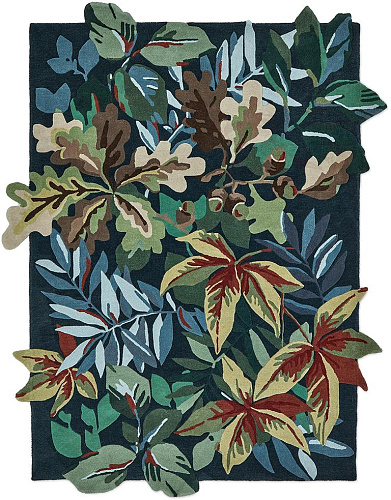
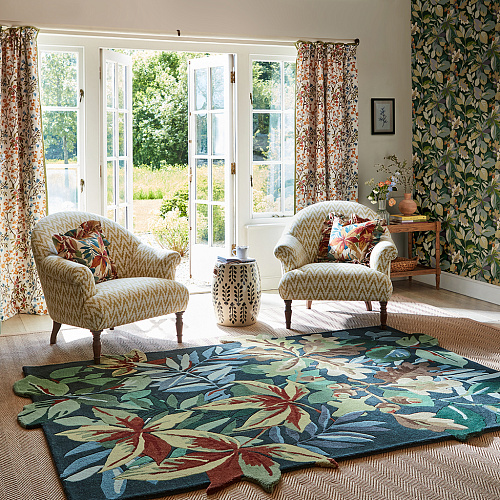
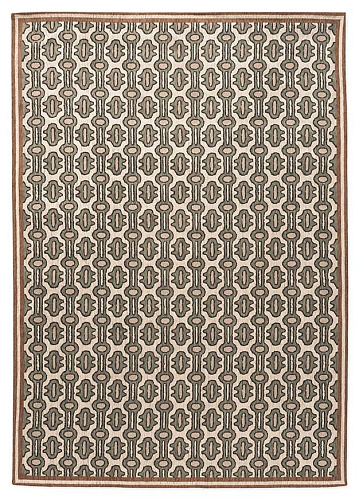
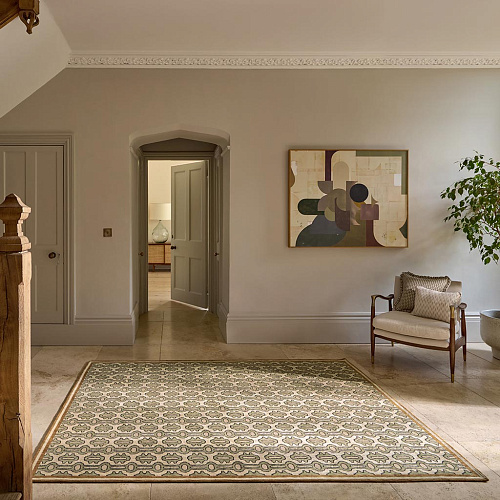
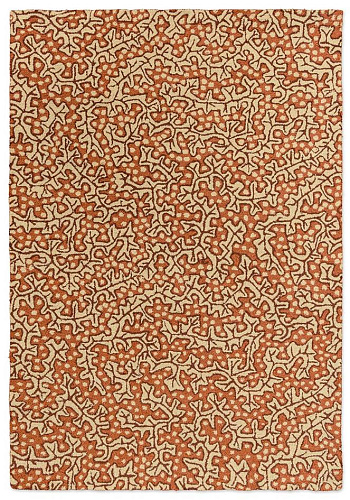
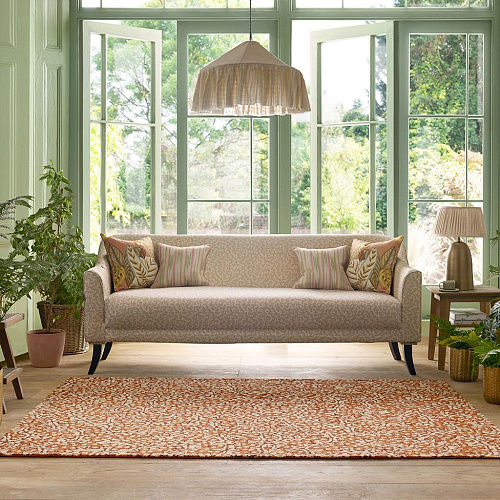
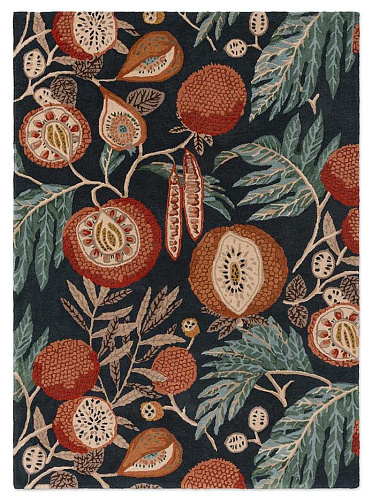
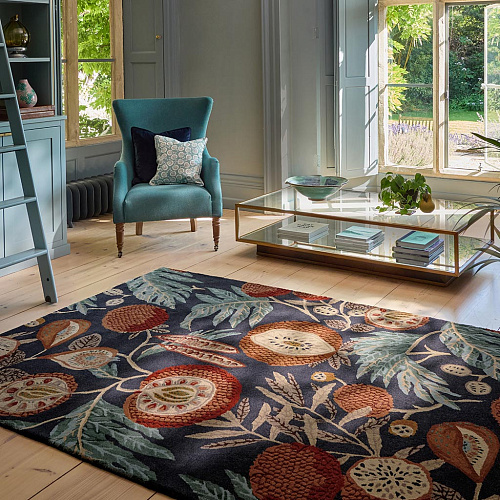
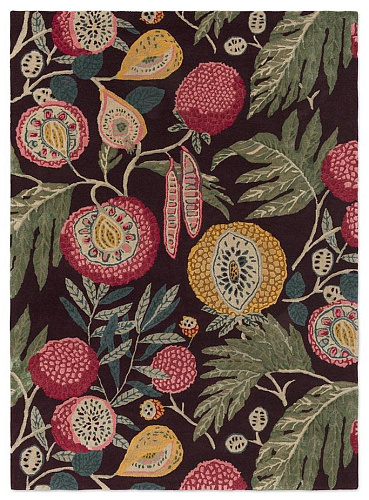
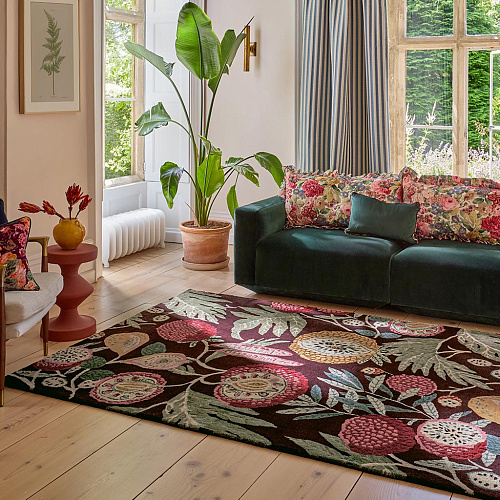
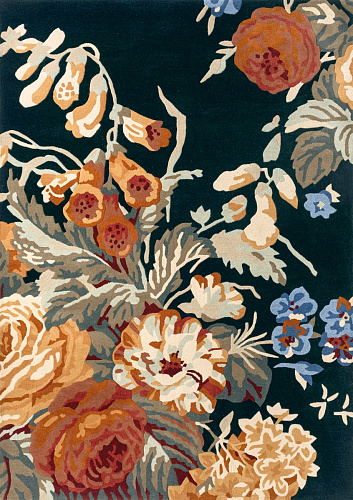
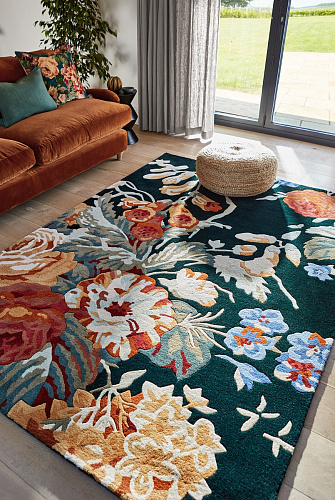
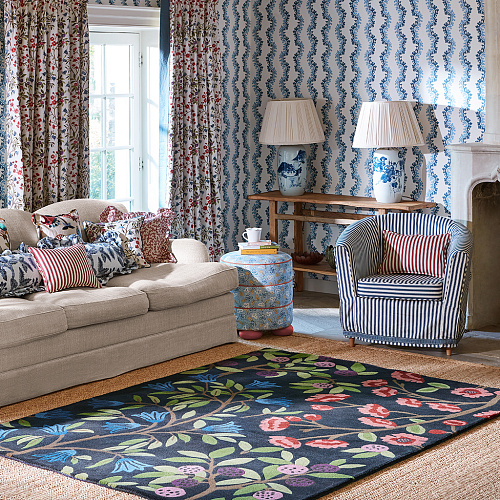
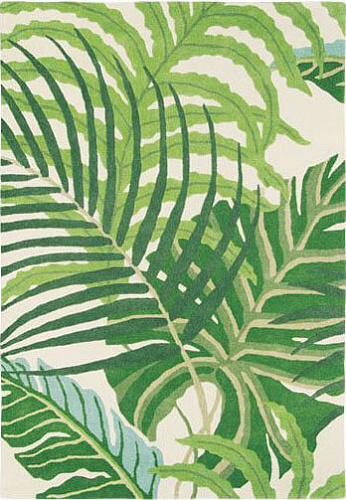
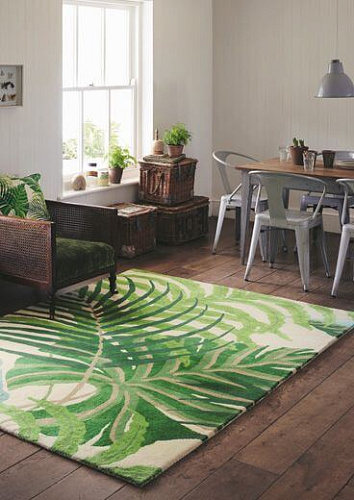
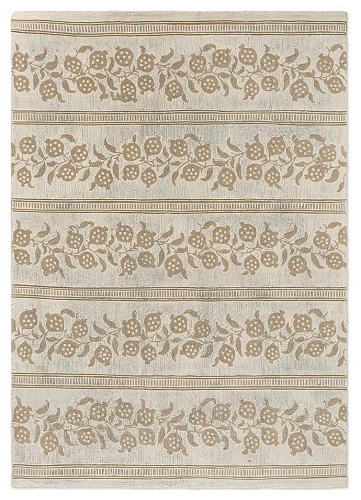
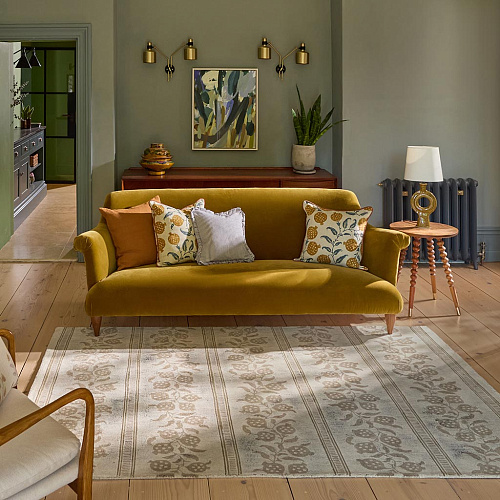
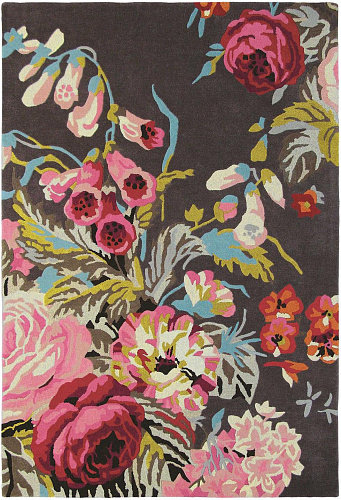
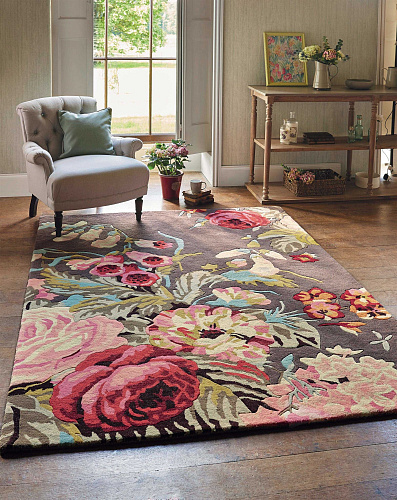
The collections themselves span a broad emotional range while staying clearly within the brand's botanical world. Rose and Peony — one of Sanderson's most beloved designs — renders a dense arrangement of British summer blooms in hand-tufted wool. Rainforest brings tropical foliage and birds into deep jewel tones with a high-low pile that adds physical texture to the visual depth. Elsdon moves in a quieter direction — watercolour-style stripes in wool and viscose, where the contemporary palette softens the abstract geometry into something almost atmospheric. Across all of them, the hand-drawn origin is still legible in the finished piece. That's the hardest thing to manufacture, and the most valuable thing Sanderson brings.
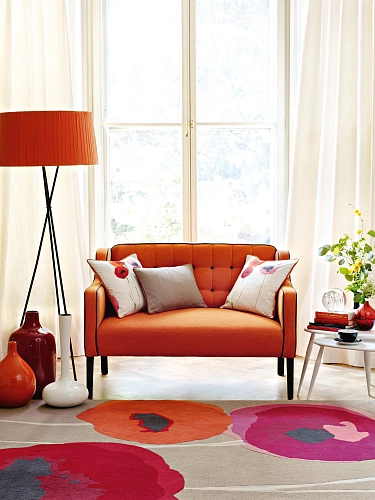
At SayRug, Sanderson rugs are stocked across the core collections in multiple sizes, with availability that tends to be more reliable than ordering through smaller specialist channels. Pricing sits firmly in the designer tier — hand-tufted pure wool construction with a design pedigree stretching back 160 years doesn't come at mass-market rates, nor should it. What you're paying for is a piece that coordinates with the broader Sanderson fabric and wallpaper universe, holds its construction over years of real use, and carries a design identity strong enough to anchor an entire room scheme.
Sanderson rugs on sale appear periodically across the catalogue, and the Sanderson rugs clearance section at SayRug is worth checking regularly — discontinued colourways and outgoing season pieces occasionally surface there at a meaningful reduction, making them one of the more accessible routes into the brand for buyers who have a specific size or palette in mind. Given how slowly Sanderson's core archive designs rotate, a clearance piece rarely feels dated — it simply reflects a colourway the brand has moved on from, not a design philosophy that has changed.